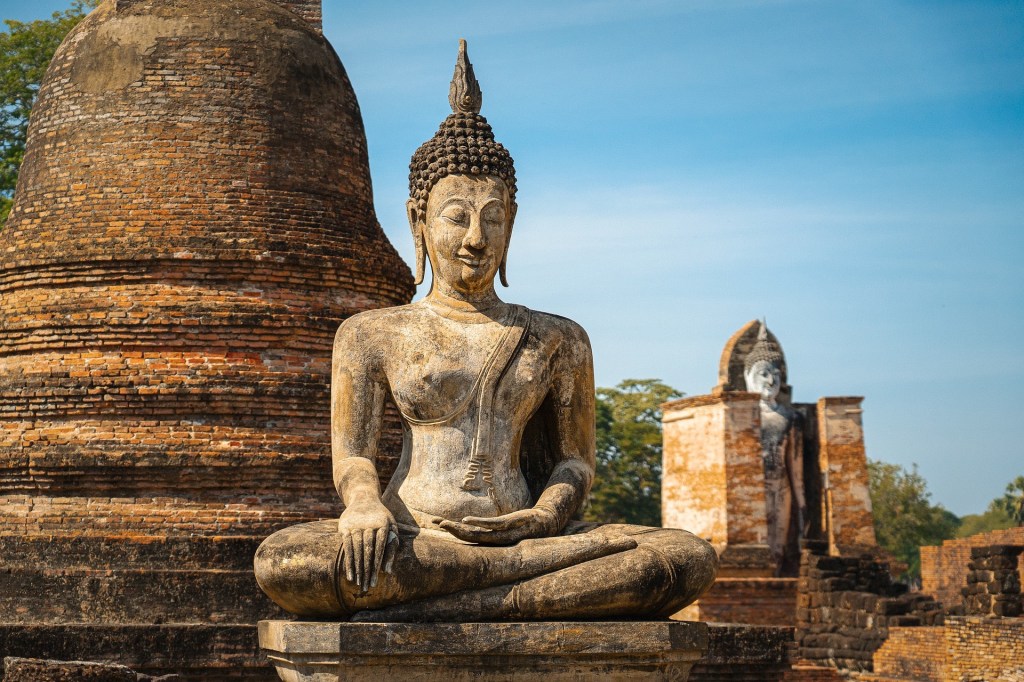
The teachings of Guatama Buddha are some of the most profound and enduring lessons in the history of humanity. Buddha’s teachings provide guidance and wisdom for those seeking to live a fulfilling and spiritual life. His teachings are timeless and still relevant in today’s modern world. The lessons of Buddha can help us overcome the challenges of daily life and lead us to a more peaceful and joyful existence.
Let’s explore the life of Buddha and the wisdom in his teachings. We’ll delve into how his teachings can be applied to modern living, and how they can help us navigate the complexities of life in the 21st century. Join us on this journey of self-discovery and enlightenment as we explore the teachings of one of the world’s greatest spiritual leaders.
Who was Guatama Buddha?
Gautama Buddha, also known as Siddhartha Gautama, was a spiritual leader and founder of Buddhism. He was born in Lumbini, Nepal, in 563 BCE to King Suddhodana and Queen Mahamaya of the Shakya clan. Gautama’s early life was one of luxury and privilege, shielded from the harsh realities of life outside the palace walls.
However, at the age of 29, Gautama left his royal life behind to seek enlightenment and to understand the nature of suffering. He became a wandering ascetic, practicing self-mortification and meditation under the guidance of various teachers.
After several years of rigorous spiritual practices, Gautama realized that enlightenment could not be achieved through self-mortification but through a path of moderation and balance. He then meditated under a Bodhi tree in Bodh Gaya, India, and achieved Nirvana, or enlightenment.
Gautama spent the rest of his life teaching the Four Noble Truths and the Eightfold Path, which formed the basis of Buddhism. His teachings emphasized the importance of self-awareness, compassion, and the understanding that suffering is an inherent part of human existence. Gautama Buddha’s teachings continue to inspire millions of people around the world to live a more mindful and compassionate life.
The Four Noble Truths
The Four Noble Truths are the foundation of Buddhism. They are considered the Buddha’s first and most important teachings, and they lay out the path to achieving enlightenment. The Four Noble Truths are:
- Dukkha (Suffering): The first noble truth acknowledges that suffering exists in life. This suffering can manifest in many ways, such as physical and emotional pain, sickness, old age, and death.
- Samudaya (Origination): The second noble truth explains the cause of suffering. The root cause of suffering is craving or attachment. We suffer because we cling to things that are impermanent and constantly changing.
- Nirodha (Cessation): The third noble truth tells us that suffering can be overcome. By letting go of attachment and craving, we can achieve a state of peace and happiness that is free from suffering.
- Magga (The Path): The fourth noble truth lays out the path to achieving enlightenment. This path includes following the Eightfold Path, which includes right understanding, right thought, right speech, right action, right livelihood, right effort, right mindfulness, and right concentration.
By understanding and following the Four Noble Truths, we can learn to let go of our attachment to things that may cause us suffering and find a path towards happiness and inner peace. These teachings are not only relevant to those who practice Buddhism, but they also offer valuable lessons for modern living that can be applied to our daily lives.
The Eightfold Path to Enlightenment
The Eightfold Path to Enlightenment is a central teaching in Buddhism and is often considered as the practical roadmap to achieving Nirvana. Buddha believed that the path to enlightenment was a personal journey and that each individual must follow this path on their own.
The Eightfold Path consists of eight interconnected practices that are designed to help individuals cultivate the appropriate mindset, behavior, and actions necessary to attain enlightenment.
The eight practices are Right Understanding, Right Intention, Right Speech, Right Action, Right Livelihood, Right Effort, Right Mindfulness, and Right Concentration. Each of these practices is essential to the journey towards enlightenment, and they build on one another to create a complete path towards spiritual development.
- Right Understanding involves understanding the true nature of reality, the Four Noble Truths, and the nature of the self.
- Right Intention involves cultivating wholesome intentions that are free from greed, hatred, and delusion.
- Right Speech involves using speech that is truthful, kind, and helpful.
- Right Action involves engaging in actions that are non-harmful, ethical, and compassionate.
- Right Livelihood involves making a living that is ethical and beneficial to others.
- Right Effort involves putting in the effort to cultivate wholesome qualities and eradicate unwholesome ones.
- Right Mindfulness involves being fully present and aware of one’s thoughts, feelings, and surroundings.
- Right Concentration involves developing the ability to focus the mind and attain deep states of concentration.
Following the Eightfold Path is not easy, and it requires a lifetime of dedication and practice. However, the teachings of Guatama Buddha provide a roadmap for living a more meaningful and fulfilling life in which individuals can cultivate the qualities necessary to attain enlightenment and live a life that is free from suffering and full of compassion and joy.
Mindfulness and Meditation
One of the most important teachings of Guatama Buddha is mindfulness and meditation. Mindfulness is the practice of being present and fully engaged in the current moment, free from distractions and judgments. Meditation is the practice of training the mind to focus on a specific object, such as the breath, and to cultivate awareness and clarity.
In today’s fast-paced and increasingly distracted world, mindfulness and meditation are becoming more and more crucial in helping people to reduce stress and anxiety, improve mental focus and clarity, and find inner peace and happiness. By practicing mindfulness and meditation regularly, we can learn to quiet the mind, cultivate a deep sense of self-awareness, and gain insight and wisdom into our own inner workings.
Moreover, the practice of mindfulness can help us to be more compassionate and empathetic towards others, as it teaches us to be fully present and attentive to their needs and feelings. By cultivating a sense of calm and inner peace through meditation, we can become more patient, tolerant, and accepting of others, and develop a heightened sense of empathy that allows us to connect more deeply with those around us.
In short, the teachings of mindfulness and meditation from Guatama Buddha offer invaluable lessons for modern living, helping us to cultivate inner peace, greater self-awareness, and a deeper connection with ourselves and those around us.
Non-Attachment and Letting Go
One of the fundamental teachings of Gautama Buddha is the practice of non-attachment and letting go. This principle is based on the understanding that everything in life is impermanent and constantly changing. Therefore, clinging to material possessions, relationships, or even ideas and beliefs can only lead to suffering.
Non-attachment doesn’t mean that we should avoid forming relationships or enjoying material possessions. Rather, it means that we should not become overly attached to them. We should appreciate them for what they are, but not rely on them for our happiness and wellbeing. When we let go of our attachments, we free ourselves from the burden of constantly trying to hold on to things that are in a state of flux.
This principle can be applied to many aspects of modern living. For instance, we often hold on to negative emotions such as anger, resentment, or jealousy, even when they no longer serve us. We may also cling to a fixed idea of who we are, and resist change even when it’s necessary for our growth and development.
By practicing non-attachment and letting go, we can learn to live in the present moment, appreciate what we have, and be open to new experiences. We can let go of our fears and anxieties, and embrace the uncertainty of life with a sense of curiosity and wonder. Ultimately, this can lead to greater peace, happiness, and fulfillment in our lives.
Compassion and Loving Kindness
Compassion and loving-kindness are two of the most important teachings of Guatama Buddha that have a significant impact on modern living. Compassion means having a deep awareness of the suffering of others and taking steps to alleviate it. Loving-kindness, on the other hand, means treating oneself and others with kindness, care, and concern.
In today’s fast-paced and stressful world, these teachings can be incredibly powerful in fostering more positive relationships and creating a more peaceful existence. By cultivating compassion, we can develop a greater sense of empathy and understanding towards others, which can lead to more harmonious relationships and a more compassionate society.
Similarly, by practicing loving-kindness towards ourselves, we can develop a greater sense of self-acceptance and self-love, which can help us to better navigate life’s challenges and build stronger, more fulfilling relationships with others.
In essence, these teachings remind us of the importance of kindness, empathy, and understanding in our daily lives. By embodying these qualities, we can create a more peaceful, compassionate, and harmonious world, one that is more in line with the teachings of Guatama Buddha.
The Middle Way
One of the most significant teachings of Guatama Buddha is the concept of the Middle Way. It is a path that avoids extremes of both indulgence and self-mortification, leading to a balanced and peaceful life. According to Buddha, self-deprivation or self-indulgence can lead to suffering, and it is essential to find a balance between the two.
The Middle Way encourages individuals to avoid going to extremes in any aspect of life, be it physical, mental, or emotional. It teaches the importance of moderation in all things, including food, sleep, and emotions. It advocates for finding a balance between our desires and needs and suggests that one should not be too attached to material possessions or relationships.
In today’s world, where people often find themselves either chasing materialistic goals or completely rejecting them, the Middle Way becomes even more relevant. It encourages individuals to be mindful of their actions and strive for a balanced life, leading to greater happiness and contentment. By practicing the Middle Way, we can cultivate a sense of inner peace, greater awareness, and a more fulfilling life.
Impermanence and Transience
One of the core teachings of Gautama Buddha is the concept of impermanence and transience. According to this teaching, everything in life is temporary and constantly changing. From the smallest blade of grass to the most massive mountains, nothing in this world stays the same forever. Even the human body undergoes constant change and transformation as we age and grow.
This teaching can be a powerful lesson for modern living, as it helps us to embrace change and let go of attachments to things that are ultimately impermanent. Whether it’s a job, a relationship, or a possession, nothing in life is guaranteed to last forever. By accepting this truth, we can learn to live in the present moment and appreciate the beauty of each passing experience.
Moreover, recognizing the impermanence of life can help us to let go of negative emotions such as fear, anxiety, and grief. When we understand that everything is constantly in flux, we can cultivate a sense of detachment and non-attachment, which can help us to overcome suffering and find peace within ourselves.
Overall, the teaching of impermanence and transience is a valuable reminder that life is fleeting and precious. By living in the present moment and letting go of attachments to things that will inevitably pass, we can find greater joy, peace, and fulfillment in our lives.
Buddha’s Teachings Applied to Modern Life
Although the teachings of Guatama Buddha date back to ancient times, they are still highly relevant and applicable to modern life. The timeless wisdom and insights provided by Buddha can help us navigate the challenges and complexities of modern living with greater ease and clarity.
For instance, one of the core teachings of the Buddha is the concept of mindfulness. Mindfulness is the art of paying attention to the present moment without judgment. In today’s fast-paced and technology-driven world, we are often distracted and disconnected from the present moment. By practicing mindfulness, we can cultivate greater awareness and focus in our daily lives, leading to reduced stress, increased productivity, and more meaningful relationships.
Another important teaching of Buddha is the concept of impermanence. Impermanence means that everything in life is constantly changing and evolving. By recognizing the impermanence of all things, we can learn to let go of attachment and embrace change with greater ease and grace. This can help us navigate the ups and downs of life with greater resilience and adaptability.
Buddha also emphasized the importance of compassion and empathy towards all beings. In a world where there is often so much division and conflict, cultivating compassion and empathy can help us connect more deeply with others and create a more harmonious and peaceful world.
Perspective
The life and teachings of Guatama Buddha offer valuable lessons for modern living. His wisdom and insights into the nature of suffering and human existence continue to resonate with people around the world today, such as myself.
By following his teachings, we can gain a deeper understanding of ourselves and the world around us. We can learn to cultivate mindfulness, compassion, and wisdom, and live our lives with greater purpose and meaning.
One of the key takeaways from Buddha’s teachings is the importance of self-reflection and introspection. By taking the time to look inward, we can gain insight into our own thoughts, emotions, and behaviors, and make positive changes in our lives.
Overall, the teachings of Guatama Buddha remind us of the importance of living a mindful and intentional life. By embracing his wisdom and insights, we can create a more peaceful and fulfilling existence for ourselves and those around us. Remember to always be compassionate, kind, and live in the moment.
Thanks for reading and stay tuned for more mind expanding and soul awakening posts!
SHOP BOOKS on AMAZON
“Old Path White Clouds: Walking in the Footsteps of the Buddha” by Thichhat Hanh – book provides a detailed and engaging account of the life of the Buddha.
SHOP: Old Path White Clouds: Walking in the Footsteps of the Buddha
“Buddha: A Story of Enlightenment” by Deepak Chopra – A fictionalized account that weaves elements of the Buddha’s life with spiritual insights.
SHOP: Buddha: A Story of Enlightenment
“The Heart of the Buddha’s Teaching” by Thich Nhat Hanh – This book offers a comprehensive overview of core Buddhist teachings and practices.
SHOP:: The Heart of the Buddha’s Teaching
“Awakening the Buddha Within: Tibetan Wisdom for the Western World” by Lama Surya Das – Draws on Tibetan Buddhist teachings to present the essence of the Buddha’s message.
SHOP: Awakening the Buddha Within: Tibetan Wisdom for The Western World
“Buddha’s Brain: The Practical Neuroscience of Happiness, Love, and Wisdom” by Rick Hanson – Explores the intersection of modern neuroscience and ancient Buddhist practices.
Buddha’s Brain: The Practical Neuroscience of Happiness, Love, and Wisdom
These books offer varied perspectives and insights into the life and teachings of the Buddha, making them valuable resources for those interested in learning more about Buddhism.
DISCLAIMER:
As an Amazon Associate I earn from qualifying purchases originating from any and all of the sites and social media accounts owned and operated by M.V. Middleton, to include Archaic Rituals and Archaic Wisdom.

 Archaic Wisdom